

Performance issues in software rarely appear all at once. They usually build quietly, affecting systems only after they have been running for some time. This pattern is exactly what many developers experience with python sdk25.5a burn lag. Applications are usually quick to start, and they act normally and they do not fail early testing. However, with time, it becomes slower in execution, the responses seem to take longer and the use of resources becomes difficult to manage.
The problem with python sdk25.5a burn lag is that it does not appear like a conventional error. No crashes or stack traces can be singly faulted. Rather, the developers observe a gradual degradation that increases as time elapses. To interpret this kind of behavior, it is important to take a deeper examination of runtime efficiency, memory management and SDK setup instead of superficial debugging of the program.
What is python sdk25.5a burn lag?
The python sdk25.5a burn lag is a slow-performance slowdown, which manifests itself in the execution of long-running applications that use Python SDK version 25.5A. The application still works well, but every operation starts to take a little more time than usual. These delays add up in hours or days and end up being apparent to the users and the operators of the system.
The importance of this issue is that the applications written in Python are frequently created to operate continuously nowadays. Background workers, automation pipelines, APIs, and data services are dependent on long-term high levels of performance. Burn lag results in decreased reliability when it manifests, and the team will need to restart more often, which further raises the overhead of operations and lowers the level of trust in the system.
Common Causes of Python SDK25.5A Burn Lag
There have been a number of patterns that have been realized in systems with burn lag. The following table encapsulates the commonest causes and their effects on performance.
| Cause | Explanation | Impact |
| Inefficient algorithms | Repeated calculations with no caching | High CPU usage |
| Memory retention | Objects not released after use | Gradual slowdown |
| Resource contention | Multiple processes sharing limited CPU or RAM | Latency spikes |
| Excessive logging | Debug logs running in production | IO bottlenecks |
| Poor SDK configuration | Default settings not tuned | Reduced throughput |
Each of these issues alone may seem harmless. However, in a long-running Python SDK25.5A environment, they compound quickly.
Impact of python sdk25.5a burn lag on User Experience
On the user side, lag in python sdk25.5a burn is experienced in the form of unaccounted slowness. Responses become slow, background processes are late, and sometimes there is a time-out with no noticeable cause. This eventually leads to a lack of trust in the system, despite the functionality not necessarily being wrong.
On the internal side, teams will experience increased infrastructure costs as the systems will need more resources to achieve a reasonable performance. The longer a burn lag remains unresolved, the more costly and disruptive it is to deal with.
Identifying python sdk25.5a burn lag using Profiling
Detecting requires measurement rather than assumptions. Profiling tools enable developers to know the actual time and resources that are being utilised during the time of operation. Py-Spy and cProfile tools help to identify the functions that use up too much CPU or run more often than necessary.
Data profiling has the tendency to identify inefficiencies that can not manifest themselves in the review of the code. These hotspots are identified and hence become obvious optimization targets. Profiling at an early age saves the chances of deterioration of performance in the long term.
Monitoring Runtime Behavior to Detect
Monitoring supplements profiling with the view of long-term visibility. Whereas profiling is concerned with the execution of the code, monitoring is related to how the system behaves with time. The metrics used like memory usage, CPU load, and request latency, show trends that indicate the development of burn lag.
Solutions such as Datadog, New Relic, and Prometheus enable teams to monitor such trends in real-time. Burn lag is a common cause behind slow increases in latency with constant traffic as opposed to demand spikes.
Best Practices to Reduce python sdk25.5a burn lag
Disciplined engineering is the way to begin reducing python sdk25.5a burn lag. The most important step is to review algorithms to remove redundant repetition. Caching of common data saves repetitive calculations and decreases the CPU load over time.
One should also take care of memory. Releases must be made when unneeded and large data structures should be treated with caution. Such practices avoid progressive accumulation of memories, which leads to a slowing down in the long run.
Code Optimization Techniques That Improve Stability
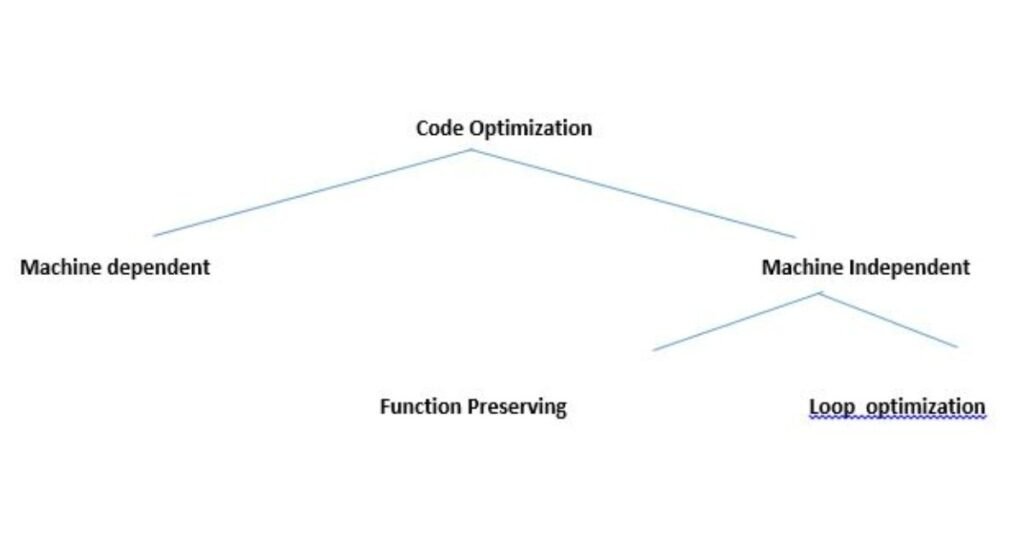
Effective optimization focuses on clarity and efficiency rather than complexity. Choosing appropriate data structures, such as dictionaries and sets, improves lookup speed. Avoiding deeply nested logic reduces execution overhead and simplifies profiling.
The following practices are commonly effective in reducing burn lag:
- Limiting object creation inside frequently called functions
- Reusing resources where possible
- Avoiding blocking operations in asynchronous workflows
Applied consistently, these changes help maintain stable performance during long runtimes.
SDK Configuration Adjustments for python sdk25.5a burn lag
Many performance issues stem from default SDK configurations that are not optimized for production workloads. Adjusting thread limits, timeouts, and logging levels often produces noticeable improvements without code changes.
| Configuration Area | Default Behavior | Optimized Approach |
| Thread management | Automatic scaling | Controlled limits |
| Logging level | Verbose output | Reduced verbosity |
| Cache policies | Short retention | Tuned per workload |
These adjustments reduce unnecessary overhead and support long-term runtime stability.
When python sdk25.5a burn lag Is Not an SDK Issue
In other setups, the python sdk25.5a burn time can be exaggerated by the infrastructural constraints as opposed to the SDK operative. Burn lag can be simulated by containers with low memory limits, shared CPU environments, and dependencies that are out of date.
The system-level constraints should be reviewed by teams before major architectural changes are made. The perceived SDK-related performance issues can be reduced by dealing with infrastructure bottlenecks.
Evaluating SDK Changes When python sdk25.5a burn lag Persists
Changing SDKs is an issue to be thought through. Although some alternative SDKs might provide the benefits of performance in some situations, migration is risky and complex. The majority of burn lag problems can be solved by profiling, optimization, and configuration tuning.
It is not until these efforts fail to eliminate problems with consistent performance that other SDK options should be considered. In most of the instances, it is possible to make better the current setup that would give faster and safer results.
Long-Term Prevention of python sdk25.5a burn lag
To avoid burnout, it is necessary to focus on prevention and not to fix it once. Normal development cycles should include performance reviews. Alerts to be monitored should be based on the gradual trends and not the abrupt failures.
Early training of the team members to utilize profiling tools is of help in ensuring that inefficiencies do not make it to production. In the long-term, such habits will seriously diminish the possibility of burn lag reoccurring.
Conclusion
There is no chance or necessity that python sdk25.5a burn lag is a problem. It occurs gradually over time as inefficiencies are inherent in it, the configuration gaps and resource pressure during long-term running. Through the formation of knowledge, the continuous monitoring, and the targeted optimisation, it is possible to achieve stable performance over time by the teams. The performance should be treated as an ongoing duty so that python sdk25.5a burn lag is not disruptive, but when it occurs, it should be checked.
Also Read About: About JRO279WAXIL: Meaning, Usage, and Digital Significance