
Software development today is no longer limited to writing code line by line in isolation. Developers work in teams, manage frequent updates, fix errors quickly, and ensure stability across versions. Because of this shift, tools that combine structure with flexibility are gaining attention. Understanding the details of gdtj45 builder software helps developers decide whether it fits their workflow or not.
This platform has grown steadily because it focuses on practical needs instead of unnecessary complexity. Developers using it often mention reduced errors, smoother collaboration, and better control over projects. Rather than acting as just another editor, the software positions itself as a complete environment for building and managing code efficiently.
What is GDTJ45 Builder Software?
GDTJ45 builder software can be understood as a development workspace rather than just an editor. It handles the entire lifecycle of code changes, from the first edit to testing and documentation. This makes it especially useful for developers working on active or long-term projects. The details of gdtj45 builder software reveal that it supports real-time collaboration and automated processes. These features help teams avoid confusion and maintain consistency, even when multiple contributors are working on the same project.
Core Capabilities Details of GDTJ45 Builder Software
The platform’s main strength lies in how its features work together instead of operating in isolation. Code creation, editing, testing, and documentation are all connected, which improves productivity over time.
| Capability | Practical benefit |
| Code editing | Faster development with syntax highlighting |
| Real-time collaboration | Teams work together without file conflicts |
| Integrated testing | Errors detected before deployment |
| Version history | Easy rollback and change tracking |
| Auto-save system | Prevents data loss during active work |
Each of these features contributes directly to smoother daily workflows rather than adding surface-level functionality.
Understanding the User Interface and Workflow
One of the most appreciated aspects of GDTJ45 is its interface. The dashboard is intentionally minimal, making it easier for developers to locate files, manage directories, and track changes. Projects begin in the Project Manager, where files are organized clearly and version history is accessible without extra steps.
When learning the details of gdtj45 builder software, the interface plays a critical role. Developers do not need to memorize complex menus because most actions are visible and logically grouped. This reduces onboarding time for new users and minimizes mistakes during active development.
How Code Editing Works Inside GDTJ45?
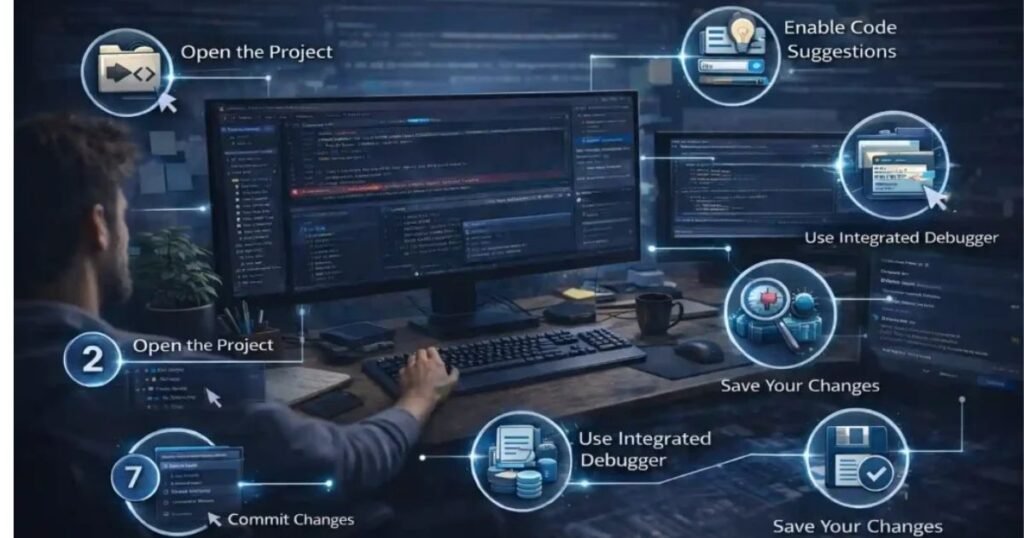
Editing code in GDTJ45 builder software follows a clear and organized workflow that helps developers make changes confidently without disrupting the project. The platform is designed to keep editing, testing, and documentation connected, which reduces mistakes and saves time during active development.
This section explains how the editing process works step by step, from opening a project to saving and documenting final changes, using a practical and easy-to-follow approach.
Step 1: Set Up and Open Your Project
Begin by launching GDTJ45 and moving to the Project Manager from the main dashboard. From there, select the project and locate the specific file you want to work on using the directory structure provided.
The Project Manager automatically maintains a version history for the last 30 days, which allows you to restore earlier versions if a change does not work as expected. This feature adds an extra layer of safety during experimentation.
Step 2: Enter the Code Editing Interface
Once the target file is selected, click the Edit option to open it in the Code Editor. The editor displays line numbers and syntax highlighting by default, which improves readability and helps identify errors quickly.
The editor supports multiple programming languages such as JavaScript, Python, and Java, with automatic language detection based on file extensions. This removes the need for manual configuration before editing.
Step 3: Update and Refine Code Elements
After entering the editor, you can begin modifying code components according to project needs. Changes made at this stage appear in real time for all collaborators, with each update tagged using timestamps and user identifiers.
Developers can add new functions, remove outdated logic, or improve existing code. The auto-save system stores updates every 30 seconds, ensuring that progress is not lost during active sessions.
Step 4: Validate Changes Through Testing
After completing edits, use the Run Test option to verify the changes. The platform executes tests in an isolated sandbox environment, preventing untested code from affecting the main project.
Test results typically appear within a few seconds and include clear error messages with line references and suggested fixes. This makes troubleshooting faster and more precise, especially for medium-sized projects.
Step 5: Save and Record Code Updates
Once testing is complete, save the finalized code using the Save button or the Ctrl+S shortcut. Before overwriting the file, the system automatically creates a backup copy to preserve the previous state.
After saving, documentation fields appear where you can describe the changes made. Recording these details helps maintain a clear project history and supports future collaboration.
Project Initialization and Version History
Starting a new project in GDTJ45 does not involve lengthy setup procedures. Developers choose their project type, load files, and begin editing almost immediately. This lightweight onboarding process helps teams move faster during early development phases.
Version history is maintained automatically for up to 30 days. This allows developers to restore earlier versions if changes introduce errors or unexpected behavior. For teams handling frequent updates, this feature adds an extra layer of confidence when experimenting with new solutions.
Details of gdtj45 builder software: Language Support and Editing Intelligence
GDTJ45 supports widely used programming languages such as JavaScript, Python, and Java. Language detection is automatic, which removes the need for manual configuration and prevents formatting issues.
The editor includes intelligent code suggestions that appear during typing. These suggestions help reduce syntax mistakes and speed up repetitive tasks. Over time, developers benefit from smoother coding sessions and fewer interruptions caused by minor errors.
Real-Time Collaboration and Team Editing
Collaboration is one of the most important elements highlighted in the details of gdtj45 builder software. Multiple developers can work on the same file simultaneously, with changes appearing instantly across sessions. Each modification is tagged with user identification and timestamps, which improves accountability and clarity.
This collaborative environment reduces the confusion that often arises when multiple versions of the same file exist. Instead of merging changes manually, teams can resolve updates as they happen.
Details of GDTJ45 Builder Software Testing Environment
Testing is integrated directly into the editor, allowing developers to validate code without switching tools. Tests run in an isolated environment, ensuring that experimental changes do not affect the main project.
Below is a snapshot of how testing features are structured within the platform.
| Testing Feature | Description |
| Isolated sandbox | Prevents unintended changes |
| Error reporting | Displays exact line numbers |
| Quick execution | Results appear within seconds |
These testing capabilities highlight how the details of gdtj45 builder software support faster debugging and cleaner code delivery.
Testing and Debugging Tools Explained
Testing is integrated directly into the development workflow. Developers can run tests within the platform without switching tools. Test results appear quickly and include clear error messages with line references, helping developers identify problems efficiently.
The debugging system supports breakpoints, variable inspection, and logic evaluation. According to platform metrics, a significant percentage of syntax and logic errors are detected during testing, which reduces issues later in production environments.
Details of GDTJ45 Builder Software Visual Code Management
GDTJ45 also supports visual code reorganization through drag-and-drop functionality. This feature allows developers to restructure code blocks without manually cutting and pasting large sections. It is especially useful during refactoring or optimization phases.
While not every developer relies on visual tools, this option adds flexibility for teams working on complex or evolving codebases.
Common Issues and Practical Solutions
Like all development tools, GDTJ45 users occasionally encounter issues. Understanding these problems in advance helps reduce downtime.
- Application crashes: Usually caused by insufficient system resources or outdated software versions
- Execution errors: Often related to syntax mistakes or missing dependencies
- Collaboration sync problems: Typically due to version mismatches or unstable internet connections
Ensuring consistent software versions and stable network conditions resolves most reported problems.
Best Practices for Using GDTJ45 Efficiently
Experienced teams follow specific practices to get the most out of the platform. These practices improve code quality, collaboration, and long-term maintainability.
Recommended best practices
- Use version control integration to track changes
- Maintain clear documentation after each major update
- Schedule regular code reviews to catch hidden issues
- Combine unit, integration, and end-to-end testing
Teams that apply these habits report fewer production issues and faster onboarding for new developers.
Conclusion:
The details of gdtj45 builder software reveal a platform designed around practical development needs rather than trends. By combining editing, collaboration, testing, and documentation into a single environment, it helps developers work more efficiently and with fewer interruptions. For teams seeking a stable and well-structured development workflow, GDTJ45 offers a reliable solution.
Also Read About: How to Install FreeDoor2.4.6.8 Without Confusion