
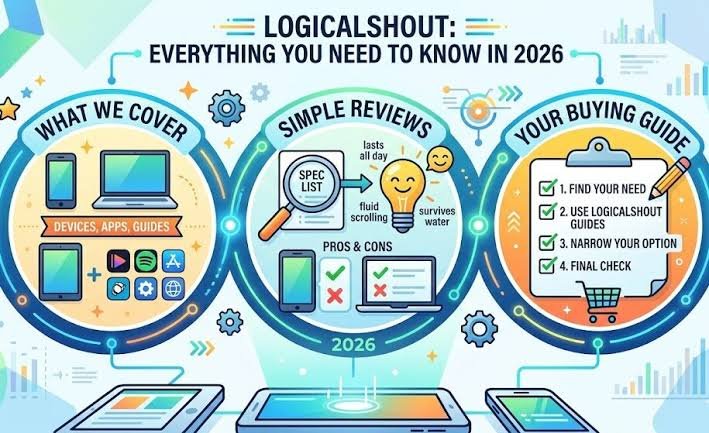
About LogicalShout comes up in search results with several different meanings attached to it, and that alone makes the topic worth untangling. Some pages present it as a technology news outlet that covers gadgets, apps, and digital trends for everyday readers. Other pages describe a completely separate analytics tool built for businesses that need dashboards, forecasts, and performance tracking. Because both use the same brand name, readers often assume they belong to one connected product, yet the available information doesn’t confirm that link clearly.
This article walks through about LogicalShout actually represents in both forms, breaks down how the analytics side reportedly works, and points out where the claims hold up and where they need a closer look. Instead of repeating vague marketing lines, the goal here is to give a grounded, practical picture that helps you decide how much weight to put on any specific claim tied to the name.
LogicalShout As A Content And Technology Platform
LogicalShout functions mainly as a tech content site, and that role shapes most of what people find when they search for it. Readers turn to it for product comparisons, app tutorials, and buying advice rather than enterprise software. Because of that, the average visitor experience feels closer to a blog than a business tool.
At the same time, a second identity keeps showing up alongside the content site. This version focuses on business analytics instead of consumer tech advice. Since both share a name, confusion spreads quickly once someone starts comparing pages that describe the brand in opposite ways.
LogicalShout Insights And Its Business Analytics Role
LogicalShout Insights refers to a described analytics system built for companies rather than casual readers. It reportedly pulls data from CRM software, marketing platforms, and accounting tools, then displays everything through one dashboard. This structure matches how most modern business intelligence tools operate today, so the concept itself isn’t unusual.
What sets this version apart, according to the available descriptions, involves combining real-time data with predictive modeling. That means the platform doesn’t just show what already happened. It attempts to forecast what comes next, based on patterns pulled from historical data.
Core Capabilities Linked To The Platform
- Continuous data updates instead of periodic reports
- Predictive modeling for demand, churn, and revenue trends
- Dashboards that adjust across devices and screen sizes
- Integration with CRM, marketing, and accounting systems
- Claimed compatibility with over 200 business applications
These features sound competitive on paper, and they align with what most analytics buyers expect in 2026. Still, features listed in marketing content don’t automatically prove real-world performance, so treating this list as a starting point rather than a guarantee makes more sense.
How The Analytics Side Of LogicalShout Reportedly Functions
The described process begins once a business connects its existing tools to the platform through API integrations. After that connection happens, the system aggregates scattered data points into a single, centralized dashboard. This step alone saves teams from switching between five different tools just to check basic performance numbers.
Following that setup, predictive models analyze historical trends to estimate future outcomes. For instance, a retail business could use this feature to anticipate seasonal demand spikes before they happen, rather than reacting once sales data already shows a shift. Whether the predictions stay accurate over time depends entirely on data quality, something no analytics platform can fix on its own.
LogicalShout Compared With Standard Analytics Tools
Since Google Analytics remains the most familiar benchmark for most readers, comparing it directly against LogicalShout Insights helps clarify the difference in scope.
| Aspect | LogicalShout Insights (as described) | Traditional Tools (e.g., Google Analytics) |
| Primary Focus | Cross-department business data | Web traffic and user behavior |
| Data Sources | CRM, marketing, operations, sales | Website and app interactions |
| Reporting Style | Real-time continuous updates | Scheduled and on-demand reports |
| Forecasting | Predictive modeling included | Limited to no predictive modeling |
| Integrations | Claimed 200+ business apps | Primarily marketing and ad platforms |
Google Analytics stays focused on website behavior, which works well for marketers tracking traffic. LogicalShout Insights, on the other hand, reportedly pulls in operational and sales data too, positioning it as a broader tool if the underlying claims hold up during actual use.
Feature Usage Patterns Across The Platform
Usage figures tied to LogicalShout Insights show up in descriptions of the platform, though none of these numbers come from an independently published study. Reading them as directional claims, rather than confirmed statistics, keeps expectations realistic.
| Feature | Reported Usage |
| Real-Time Analytics | 85% |
| Predictive Modeling | 72% |
| Custom Dashboards | 68% |
| Competitor Analysis | 54% |
| Data Integration | 61% |
Even though these percentages look precise, precision alone doesn’t confirm accuracy. Requesting a documented breakdown before repeating these figures elsewhere protects your credibility as much as theirs.
Industry Use Cases For LogicalShout Analytics
Different industries apparently use the platform for different goals, based on the use cases tied to it. Seeing these side by side makes the intended scope easier to picture.
| Business Function | Primary Use Case | Key Metric Tracked |
| E-commerce | Cart abandonment analysis | Conversion rate optimization |
| Digital Marketing | Campaign performance tracking | ROI and engagement metrics |
| Content Creation | Audience behavior patterns | Traffic sources and time on page |
| Manufacturing | Operational efficiency monitoring | Production output and downtime |
| Financial Services | Fraud detection systems | Transaction pattern analysis |
For example, an online store might use this kind of dashboard to figure out exactly where shoppers drop off during checkout, then adjust the payment flow based on that pattern. That use case feels practical, assuming the data connections behind it actually work as described.
Reported Business Outcomes After Using The Platform
A handful of performance figures appear alongside descriptions of LogicalShout Insights. Since these numbers come from a single description rather than a verified audit, treating them as reported claims avoids overstating their reliability.
| Metric | Reported Improvement |
| Decision Speed | +42% |
| Operational Costs | -28% |
| Customer Retention | +35% |
| Revenue Growth | +31% |
Numbers like these appear often across the analytics industry in general, so they aren’t implausible. However, without a documented case behind them, they work better as talking points than as figures to plan a budget around.
Mistakes People Make While Researching LogicalShout
Many readers assume every page mentioning LogicalShout tells the same story, and that assumption creates unnecessary confusion. Because multiple descriptions exist, treating one page as the full picture usually leads to a skewed understanding.
Another frequent mistake involves repeating statistics without checking where they originated. A 42% improvement in decision speed sounds convincing at first glance, yet numbers without context carry very little real weight. People also tend to assume the content platform and the analytics tool share the same team and track record, even though nothing confirms that connection directly.
Smart Ways To Verify LogicalShout Claims
Before relying on anything tied to LogicalShout in a business context, a few habits separate useful information from filler content.
- Check how recently the content was published
- Look for consistency across multiple descriptions of the platform
- Request a live demo before trusting analytics claims
- Compare reported statistics against similar tools in the same category
- Avoid repeating numbers that lack a clear explanation
For instance, if a marketing team considers testing LogicalShout Insights, requesting trial access first makes far more sense than adopting it based purely on promotional claims. That single step often reveals more than an entire page of marketing copy ever could.
Final Thoughts
About LogicalShout doesn’t reduce to one tidy answer, and pretending otherwise would only mislead readers. The brand operates mainly as a tech content platform, while a separate analytics concept called LogicalShout Insights claims a different, business-focused role. Both descriptions can exist at once, but neither deserves blind trust without a quick check first.
If you’re reading LogicalShout content, verify anything that reads like a hard fact before repeating it elsewhere. If you’re considering the analytics platform for your business, ask for real access and real numbers before making any decision. That approach keeps your judgment grounded in something more solid than promotional language.
FAQs
What is LogicalShout mainly used for?
It mainly functions as a tech news and review platform for gadgets and apps.
Is LogicalShout Insights a confirmed analytics tool?
It’s described as one, though independent confirmation remains limited.
Does LogicalShout offer business dashboards?
Some descriptions mention dashboards tied to its analytics arm, LogicalShout Insights.
How does LogicalShout differ from Google Analytics?
It reportedly includes CRM and sales data, not just website traffic.
Can small businesses use LogicalShout Insights?
Specific pricing details aren’t confirmed, so direct contact is recommended.
Is LogicalShout reliable for everyday tech news?
Reliability varies across pages, so cross-checking claims helps.
Does using LogicalShout Insights require technical skills?
It’s described as beginner-friendly, though setup may need IT support.
Which industries use LogicalShout Insights the most?
E-commerce, marketing, manufacturing, and financial services appear most often.
Why do different pages describe LogicalShout differently?
Multiple unofficial pages exist, each written from a different angle.
Should reported LogicalShout statistics be trusted directly?
Only after checking their accuracy through a documented, verifiable source.
Read More: From Orbits to Overlays: How Visualization Logic Shapes Real-Time Cricket Platforms