

Electricity bills usually become the biggest reason people start searching for solar solutions. An additional air conditioner, extended summer nights, working home and, all of a sudden, the monthly bill reaches ₹6,000 or even ₹8,000. That is precisely the reason why the search query 5kw solar system price in india jumped steeply in such metropolises like Chennai, Jaipur, Pune, Kochi, and Bengaluru in 2026. Rooftop solar is no longer viewed as a luxury by most homeowners. They now are looking into it as a long term money saving investment. An appropriately fitted solar system cuts down on power consumption, secures families against escalating electricity bills and establishes a reliable monthly savings. People who installed solar three or four years ago now openly recommend it because they already recovered a major portion of their investment
I recently spoke with neighbours who installed a rooftop setup in early 2026. His family runs two inverter ACs almost daily because of the heat. Earlier, his electricity bill stayed around ₹6,500 every month. the bill dropped below ₹1,000 after solar installation and net metering approval. He admitted that the upfront investment looked expensive initially, yet the monthly savings changed his perspective within weeks. The growing interest in 5kw solar system price in india with subsidy also comes from government support under PM Surya Ghar Yojana. Homeowners are now aware that there is reduced cost of installation through subsidy assistance particularly to middle size residential systems.
What Is a 5 kW Solar System & How Does It Work?
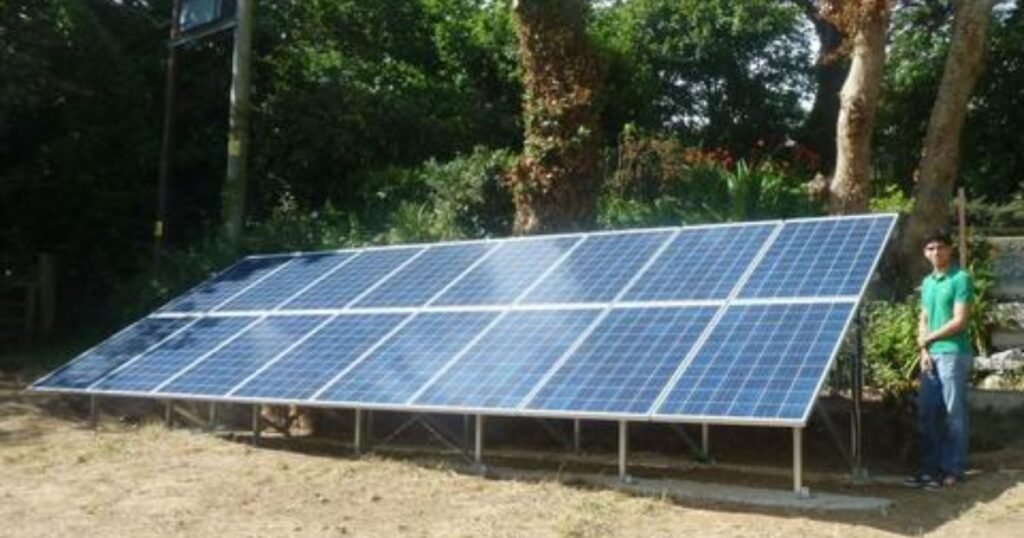
A 5kW solar setup works like a small electricity generation station installed on your rooftop. The system captures sunlight through photovoltaic panels and converts it into usable electricity for home appliances. Most medium and large Indian households prefer this capacity because it balances power generation and investment quite well. A standard setup usually supports refrigerators, fans, lights, televisions, washing machines, water motors, laptops, and two or three inverter air conditioners comfortably during daytime usage. Most systems generate around 20–25 electricity units daily, depending on sunlight exposure and roof direction.
The average 5kw solar system price in India generally ranges between ₹2.5 lakh and ₹3.2 lakh for an on-grid installation. Hybrid systems cost more because battery storage increases both equipment cost and installation complexity. Roof structure, inverter brand, panel efficiency, and wiring quality also affect the final project amount.
Average Electricity Generation From a 5kW Setup
| System Size | Daily Output | Monthly Output |
| 5kW Solar System | 20–25 Units | 600–750 Units |
Most homeowners recover their investment within four to five years if electricity consumption remains high throughout the year.
What are the Components Included in 5 kW Solar Setup?
Many first-time buyers assume solar installation only involves rooftop panels. In reality, several technical components work together to create a reliable solar power system. Good installers focus equally on panel quality, inverter efficiency, wiring safety, and mounting durability.
Cheap installations often create future maintenance issues because installers compromise on smaller hidden components instead of visible panels. That is why experienced buyers usually pay close attention to inverter brands, protection systems, and structural quality.
Main Components Inside a 5kW Solar System
| Component | Purpose |
| Solar Panels | Generate electricity from sunlight |
| Solar Inverter | Converts DC power into AC electricity |
| Mounting Structure | Holds panels securely on rooftop |
| AC/DC Distribution Box | Protects against electrical faults |
| Earthing System | Reduces electrical risks |
| Net Meter | Measures exported and imported electricity |
| Solar Cables | Transfers electricity safely |
Most premium installations in 2026 now use TOPCon or Mono PERC panels because they perform better during high Indian temperatures.
Types of 5 kW Solar System Price in India (2026)
Solar setups do not all households need the same type of set up. Other house owners just desire to pay less in their electricity bills whereas some also require a backup in case of power outages. Due to the latter, the solar companies often prefer to suggest the on-grid, off-grid, or a hybrid system based on the use habits and the reliability of electricity. The total price of the 5kw solar system in india varies greatly according to the setup one opts to install.
1. On-Grid Solar Systems
On-grid systems are linked up to the network of electricity and do not require the use of batteries. The reason why these setups are cheap is due to reduced number of components used and in their maintenance. This is the choice of most urban households since electricity supply in cities is typically not fluctuated.
2. Off-Grid Solar Systems
The off-grid systems do not depend on the electricity grid. They accumulate electricity produced in them and even their power supplies when the power goes off. These systems are more favored in remote areas and those places where electricity supply is unstable.
3. Hybrid Solar Systems
Hybrid systems use sources of battery storage with grid connectivity. These systems offer an insurance in times of power outages in addition to lowering monthly power bills. The cost of 5kw hybrid solar is not yet much cheaper in india due to the lithium battery and hybrid inverters which escalate the overall cost of installation.
Estimated Pricing Based on System Type
| System Type | Estimated Price Range |
| On-Grid | ₹2.5 Lakh – ₹3.2 Lakh |
| Off-Grid | ₹4 Lakh – ₹5.5 Lakh |
| Hybrid | ₹4.5 Lakh – ₹6 Lakh |
Families living in areas with regular power cuts usually prefer hybrid systems despite the higher investment.
5kW Solar System Price in India With Subsidy for Residential Homes
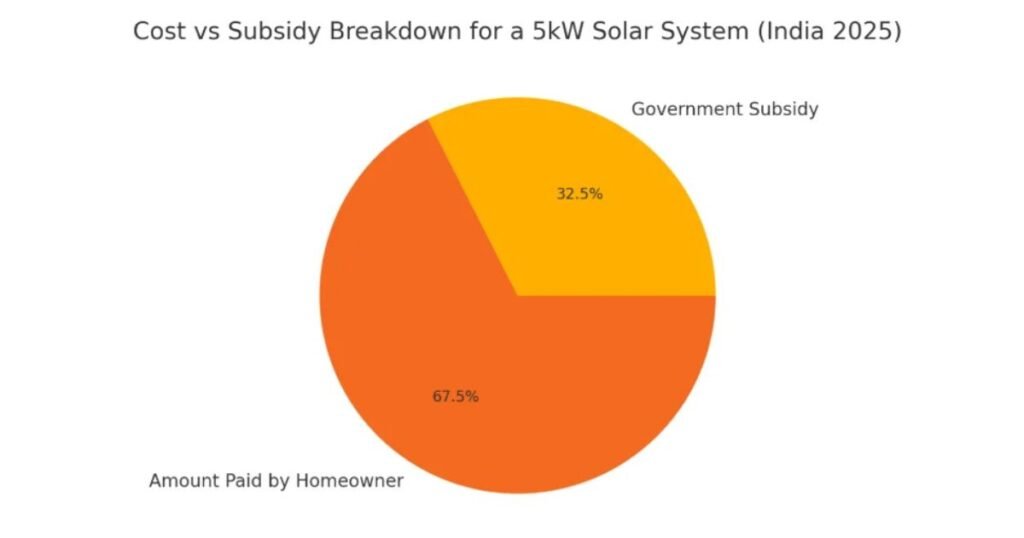
Government subsidy changed rooftop solar adoption completely across India. Earlier, many families delayed installation because of the upfront investment. The PM Surya Ghar Yojana reduced that financial pressure and made residential solar much more practical. The 5kw solar system price in india with subsidy now feels manageable for middle-class households that want long-term electricity savings. Homeowners receive subsidy directly into their bank accounts after installation and inspection approval.
Most residential systems currently qualify for subsidy support only when approved vendors install ALMM-compliant panels and complete net metering procedures properly.
PM Surya Ghar Subsidy Breakdown
| Capacity Slab | Subsidy Amount |
| First 2kW | ₹60,000 |
| Additional 1kW | ₹18,000 |
| Total Maximum Subsidy | ₹78,000 |
Many homeowners assume larger systems receive unlimited subsidy support. That is not correct. The subsidy remains capped mainly around the first 3kW calculation. Still, larger systems continue offering stronger long-term savings because cost-per-watt reduces as capacity increases.
Subsidy Structure Under PM Surya Ghar Yojana (2026)
The PM Surya Ghar Yojana simplified rooftop solar installation for residential users. Earlier, subsidy approval involved complicated paperwork and slow approvals. The current portal-based process feels faster and much more transparent. Homeowners now register online, upload documents, select approved installers, and track approval status directly through the portal. That transparency improved trust among first-time buyers significantly.
The process generally starts with rooftop inspection and technical feasibility approval from the local DISCOM. Installation work begins after approval confirmation.
Common Documents Required
- Aadhaar Card
- PAN Card
- Latest Electricity Bill
- Bank Account Details
- Property Ownership Proof
Installers must also hold MNRE approval status. Otherwise, subsidy applications may face rejection despite successful installation.
State wise 5 kW Solar System Price in India With Subsidy and Without One?
Solar installation cost changes across different Indian states because labor charges, transportation expenses, local policies, and demand levels vary regionally.
The table below provides estimated pricing for residential rooftop installations during 2026.
| State / Region | Estimated Price Without Subsidy | PM Surya Ghar Subsidy | Approx Final Cost After Subsidy |
| Rajasthan (Jaipur) | ₹2,60,000 | ₹78,000 | ₹1,82,000 |
| Gujarat (Ahmedabad) | ₹2,65,000 | ₹78,000 | ₹1,87,000 |
| Tamil Nadu (Chennai/Coimbatore) | ₹2,75,000 | ₹78,000 | ₹1,97,000 |
| Karnataka (Bengaluru) | ₹2,80,000 | ₹78,000 | ₹2,02,000 |
| Maharashtra (Mumbai/Pune) | ₹2,90,000 | ₹78,000 | ₹2,12,000 |
| Delhi NCR | ₹2,78,000 | ₹78,000 | ₹2,00,000 |
The estimates normally contain installation, inverter mounting, mounting structure, and standard support services.
Benefits of Installing a 5kW Solar Panel System at Home
The majority of homeowners start researching solar due to the desire to expend less on electricity first. But monthly savings are just the tip of the iceberg in terms of long term benefits. A rooftop installation guards houses against increasing electricity charges and less reliance on conventional power supply. Homes with heavy daytime electricity usage generally recover investment faster because solar generation remains strongest during sunlight hours.
One family in Chennai recovered most of their installation cost within four years because their daytime AC usage stayed high during summer. Earlier, they constantly worried about electricity consumption. Solar installation reduced that stress almost immediately.
Practical Advantages Homeowners Notice
| Benefit | Impact |
| Lower Electricity Bills | Savings up to 80–90% |
| Low Maintenance | Minimal servicing required |
| Long Lifespan | Panels often last 25 years |
| Better Property Value | Solar-ready homes attract buyers |
| Cleaner Energy Usage | Lower carbon emissions |
Most homeowners also appreciate the peace of mind that comes from stable long-term electricity costs.
Why Homeowners Choose Kondaas for Rooftop Solar Installation?
Installation quality matters far more than many buyers realize initially. A poor-quality setup can reduce electricity generation, damage roofing, and create future maintenance expenses. Kondaas became popular across Tamil Nadu and Kerala because the company handles installation, technical approvals, subsidy documentation, and net metering support together. That full-service process reduces confusion for first-time buyers.
Many customers specifically prefer installers who manage DISCOM approvals directly because delayed net metering can slow down savings.
Reasons Homeowners Trust Kondaas
| Feature | Benefit |
| MNRE Approved Installation | Easier subsidy processing |
| ALMM Listed Panels | Full government compliance |
| Experienced Engineers | Better installation quality |
| Transparent Pricing | No hidden charges |
| AMC Support | Long-term maintenance assistance |
Several residential customers across South India also appreciated their post-installation support response, which becomes important once systems start daily operation.
5kW Solar Panel Step-by-Step Installation Process (Subsidy Compliant)
Most homeowners expect rooftop solar installation to feel highly technical. The actual process remains fairly smooth when experienced installers manage approvals and coordination properly. The installation starts with roof inspection and sunlight analysis. Installers check structural strength, roof direction, available shadow-free area, and daily sunlight exposure before finalizing the layout.
After technical approval, installers begin mounting structure fabrication, panel installation, inverter wiring, and net meter coordination.
Standard Installation Workflow
| Step | Process |
| 1 | Rooftop inspection |
| 2 | Technical feasibility approval |
| 3 | Structure installation |
| 4 | Solar panel mounting |
| 5 | Inverter setup and wiring |
| 6 | Net meter installation |
| 7 | Final inspection and commissioning |
Most residential installations finish within one to three weeks depending on approval timelines.
Important Things to Check Before Buying a 5kW Solar System
Price alone should never decide rooftop solar quality. Some installers reduce pricing by using weak mounting structures, poor wiring, or low-grade inverters. Homeowners should carefully verify technical specifications and warranty details before signing agreements.
Important Things Buyers Should Verify
- MNRE-approved installer status
- ALMM-listed panels
- Trusted inverter brand
- Workmanship warranty
- Net metering support
- Service response availability
One Hyderabad homeowner replaced his inverter within 14 months because the installer selected a cheap imported model. That unexpected repair expense reduced his early savings significantly.
Net Metering Explained for Rooftop Solar Users
Net metering creates the biggest financial advantage for most residential users. During the daytime, most households are bigger producers of electricity than consumers. Rather than a wastage of additional electricity, the system sends it to the electricity grid. The electricity department follows those units using a bi-directional net meter and later modulates them with the night usage.
How Net Metering Works
| Situation | Result |
| Extra Daytime Generation | Electricity exported to grid |
| Nighttime Consumption | Adjusted through credits |
| Monthly Billing | Reduced net electricity charges |
That adjustment process explains why many rooftop solar users receive surprisingly low electricity bills even while using multiple appliances daily.
ROI and Payback Period of a 5kW Solar System in India
Most buyers eventually ask the same question how long will it take to recover the investment? The answer depends on electricity consumption, local tariff rates, and system efficiency. Still, most well-installed systems recover cost within four to five years. Households using air conditioners regularly during daytime often experience faster recovery because solar generation directly offsets expensive electricity usage.
| Factor | Approximate Value |
| Initial Investment | ₹2 Lakh Approx |
| Annual Savings | ₹45,000–₹55,000 |
| Payback Period | 3.5–4.5 Years |
| Expected System Lifespan | 25 Years |
After investment recovery, homeowners continue generating electricity almost free for many years.
5kw Hybrid Solar System Price in India for Backup Power Needs
Power cuts still affect several Indian regions despite urban infrastructure improvements. Families living in areas with unstable electricity often choose hybrid systems because they continue supplying electricity during outages. The 5kw hybrid solar system price in india stays higher mainly because batteries add substantial equipment cost. Even then, many homeowners consider the investment worthwhile because uninterrupted power changes daily comfort significantly.
A family in Kochi shifted from diesel generator dependency to hybrid solar during 2026. Their work-from-home setup suffered frequent interruptions during monsoon power cuts earlier. After switching to hybrid solar, they noticed lower noise, reduced fuel expense, and much better daily convenience. Hybrid systems also provide flexibility because they balance solar generation, battery storage, and grid usage together.
Conclusion:
The 5kw solar system price in india finally feels practical for regular households instead of only premium homeowners. Government subsidy support, improved panel technology, and rising electricity tariffs pushed rooftop solar into mainstream residential planning much faster than expected. Families installing rooftop systems today usually think beyond immediate savings. They want predictable electricity expenses, lower dependency on rising tariffs, and long-term financial stability. A properly installed setup quietly delivers all three benefits for decades. The growing interest in 5kw solar system price in india with subsidy also proves that homeowners now understand the financial value of solar much better than before. People no longer install rooftop systems only because they sound modern. They install them because the numbers finally make practical sense.
At the same time, buyers researching the 5kw hybrid solar system price in india usually focus on uninterrupted comfort along with savings. That combination matters greatly in areas where power cuts still disrupt daily life. The best part feels surprisingly simple. Once the system starts generating electricity properly, most homeowners stop worrying every time summer arrives or electricity rates increase again.
Related Articles: