
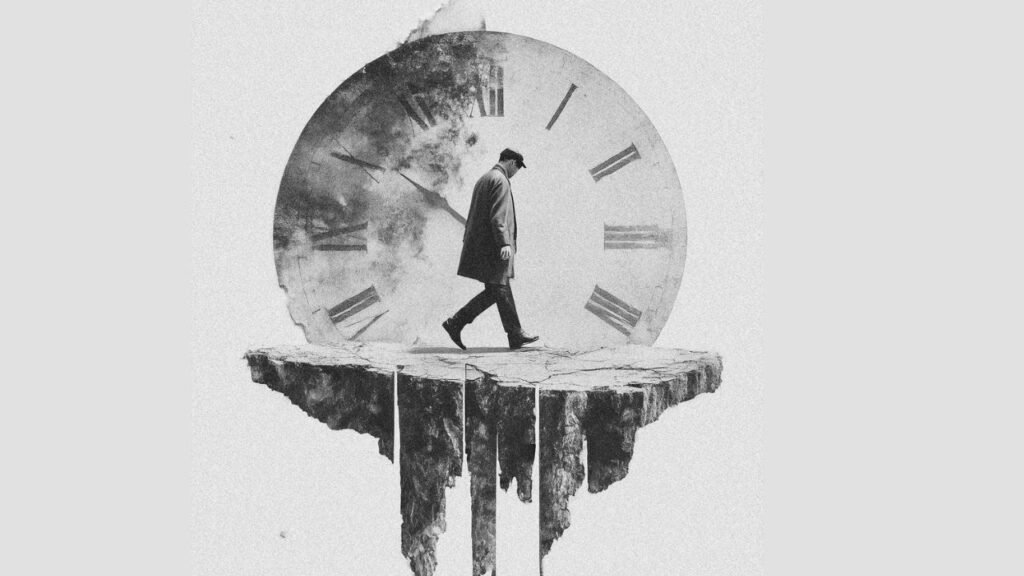
Understanding complex systems often feels confusing, especially when many factors change at the same time. This is where the idea of ficulititotemporal becomes useful and practical in real life. It assists in the explanation of the interaction of various factors with time rather than acting independently. It enables you to look past individual occurrences and concentrates on trends that are in the process of transformation. It relates time, behavior and interaction in an orderly manner. This concept is therefore being applied by experts in neuroscience, artificial intelligence, as well as system design to enhance predictions and decision-making. This article will explain what ficulititotemporal is, how it came about, its use, and its significance to the modern world.
What is Ficulititotemporal?
Ficulititotemporal is a process of evolving over time but in one which interacts with numerous variables simultaneously. It is not in a straight-line design. Rather, it dwells on the effect of various factors on each other that are dynamic and continuous. In addition, this notion underscores the fact that the results are seldom pegged on one element. Instead, they rely on time-based interactions and changes. As an example, you can look at how people behave and you will find out that the past experiences, the current conditions, and the external cues all combine. Thus, ficulititotemporal gives a more down-to-earth explanation of such cases.
Origin and Development of Ficulititotemporal Thinking
To begin with, the behavior and patterns were studied using simple and linear models by the researchers. Though they also tended to lack the ability to explain the complexity of the real world. Scientists, therefore, started experimenting with more advanced methods that incorporated time and interaction as one.
With the passage of time, specialists in the fields of cognitive science, physics, and computer science worked together to develop superior frameworks. These systems resulted in the creation of ficulititotemporal thinking which is concerned with dynamic relationships as opposed to fixed outcomes. Besides, this approach made predictive modeling more precise.
Key Development Phases
- Early research focused on time-based cognition
- Later, interdisciplinary work improved models
- Finally, predictive systems became more accurate
Thus, this idea developed into both theory and practice of the contemporary science. Furthermore, scholars found out that by applying ficulititotemporal, they could study systems more in-depth and forecast results more effectively.
Role of Ficulititotemporal in Brain and Neuroscience Studies

You will observe when you study the human brain that it all depends on timing and sequence. The signals are transmitted by the neurons in patterns and these patterns are dynamic. Due to this fact, ficulititotemporal becomes crucial in the study of the functionality of the brain. Moreover, this method is useful in detecting disorders in which the timing is disrupted.
Brain Analysis and Tools
| Tool | Purpose |
| EEG | Measures electrical activity |
| fMRI | Tracks brain region activity |
| Neural models | Predict behavior patterns |
Consequently, ficulititotemporal enhances knowledge and management of neurological disorders. In addition, other disorders like Parkinson’s disease and epilepsy tend to have problems with timing. Hence, the idea aids researchers to trace irregularities in a more effective way.
Ficulititotemporal Applications in AI and Machine Learning
Time-based processing of data is of great importance in artificial intelligence in current technology. Systems are required to know sequences and patterns, as well as context, and not individual inputs. Ficulititotemporal comes in here very handy.
As an example, in case of communication with a chatbot, the device receives not only the current input, but also the past interactions. Equally, speech recognizing systems are based on timing and order to be able to interpret language appropriately. Thus, the idea assists in enhancing precision and flexibility.
Practical Applications in AI
- Natural language processing
- Speech recognition systems
- Autonomous navigation
Case Insight:
One of the AI systems was a small one that became much more accurate in predictions with the introduction of the temporal modeling technique. It began to identify patterns more productively and gave more effective responses. The above clearly demonstrates the way ficulititotemporal can improve system performance.
Challenges and Limitations of Ficulititotemporal Models
Understanding systems that change over time with multiple interactions can feel overwhelming. Such models usually have huge sets of data and stratified relationships, which complicates the process of analysis. In addition, scientists should trade accuracy and clarity, as more insight can cause interpretability to be less.
1. Data Complexity in Multi-Variable Systems
Patterns are more difficult to isolate when numerous variables are involved at the same time. Consequently, the slightest alterations may influence the results in unpredictable directions. That is why specialists should monitor and systematize this information with the help of sophisticated applications.
2. Difficulty in Interpreting Model Outputs
In spite of the fact that models can lead to precise outcomes, it is difficult to see why they do so. Therefore, users occasionally depend on results without even understanding the reasoning behind the results. This introduces a discrepancy between prediction and explanation.
3. High Computational Requirements
These models need powerful computing machines to work efficiently with data. Analysis can either be sluggish or not complete without appropriate resources. As such, scalability is still an issue to broad adoption.
4. Balancing Accuracy and Practical Use
With increased complexity, there is an increase in the accuracy, but a decrease in usability. Therefore, scholars tend to make models simpler to make them more practical. However, Precision can be compromised by simplification.
Future Scope of Ficulititotemporal in Technology and Research
Looking ahead, the future of ficulititotemporal appears promising and impactful. With the ever-changing technology, its uses will increase in various areas. As an illustration, using this concept, the healthcare systems can forecast diseases before they manifest.
Likewise, wearables would be able to track the health trends and issue early warnings in real-time. Moreover, AI systems can also be more versatile and situational.
Future Opportunities
- Smart healthcare monitoring
- Advanced AI assistants
- Personalized education systems
Applying Ficulititotemporal Thinking in Everyday Decisions
Patterns that are formed over a long period tend to be relied upon in daily decisions. You can make things better by looking at the changing circumstances over time so that you can not concentrate on the individual events. The style is useful both at work and in personal life.
1. Observing Patterns Over Time
All you need to do is follow behavior days or weeks and you start to see patterns. As an illustration, one may consider productivity, which is often based on the habitual nature as opposed to a single effort. Hence, the long-term observation is more insightful.
2. Identifying Connected Influences
It is hard to make decisions based on a single factor. Rather, there are various factors, including time, surroundings and previous experience that determine results. Being aware of these relationships will guide you to make even wiser decisions.
3. Using Past Trends to Predict Outcomes
By examining the past trends, you can be able to foresee the outcomes in the future. As an example, companies study previous sales patterns in order to design strategies. On the same note, past experiences can be used by individuals to guide decisions.
4. Improving Decision-Making with Context
When you consider both time and interaction, your decisions become more informed. As a result, you avoid impulsive choices and focus on sustainable outcomes.
Conclusion:
ficulititotemporal gives more insight into the way systems change over time when interacting in many different ways. It interrelates the patterns, time, and variables into one composite structure. In addition, it enhances prediction, analysis, and makes sound decisions in different disciplines. With the increase in technology, the role of ficulititotemporal will only increase. This is a vital concept in the outlook of future development and knowledge.
Also Read About: 3abwlql23: Its Importance and Digital Significance