

Falotani is an idea that is easily relatable when you get the concept although the term itself may be new. Falotani is something that many people face when they read about digital growth and cultural knowledge or personal expression and feel that it has a deeper meaning that cannot be described just by a single definition. It is not part of one business, culture or era. It is rather flexible and varies depending on the place and use.
On a more fundamental level, it is an expression of human perception of direction, consciousness and advancement. It is an appeal to the necessity of having balance in a busy world. It is not about speed or control but about observation, learning, and deliberate movement. This combination is why Falotani continues to gain relevance across modern and traditional spaces alike.
What Is Falotani?
Falotani can be described as a guiding concept rather than a rigid rule. It deals with perception of the environment prior to decision making and making decisions based on the knowledge and not the coercion. This has made it desirable in the situations where speed is not as important as clarity.
The concept is relevant in the modern world since numerous systems focus on the output and do not reflect. It questions that trend as it puts knowledge in the forefront of action. By using the falotani thinking, people are always able to move with confidence and less reversals that come. In the long run, this establishes more stable development and success.
Falotani in Digital Thinking and Digital Engagement
The digital modern realms have a strong connection between it and the way platforms and creators interact with individuals. Instead of cramming it down the throats of people, working through this method appreciates authentic engagement and sustained trust. Consequently, the digital interaction turns more valuable and less business-like.
Organizations that embrace the thinking of Falotani observe trends, and then make changes. They monitor the response of the users, where they are interested in, and what creates friction.
How falotani shapes digital behavior
- It supports gradual optimization instead of aggressive tactics
- It values feedback loops over one-time launches
- It aligns content with real human needs
Through this lens, digital engagement feels responsive rather than scripted. That difference often determines whether an audience stays or quietly leaves.
Falotani Historical Connection to Polynesian Navigation
It also echoes concepts that are based on traditional knowledge systems especially the Polynesian navigation. Several centuries prior to the advent of modern tools, navigators used to navigate open seas using stars, waves, winds, and behaviors of animals. Attention, memory, and patience were involved in their success.
This system was not something that could be learned in haste and needed years to learn. They were made on trends of past couple of years as opposed to real-time data. The same line of reasoning can be found in the contemporary interpretation of falotani in which contextual understanding is more important than speed.
Core parallels with Polynesian navigation
| Traditional Principle | Modern Interpretation |
| Reading natural signs | Observing behavioral signals |
| Learning through practice | Improving through iteration |
| Trust in patterns | Confidence built on insight |
Because of this connection, it carries a sense of depth that purely modern concepts often lack.
Falotani as a Marker of Creative Identity
It has acquired symbolic definitions in the creative and online realms. Most people refer to it to show originality and individual direction without the use of fads. It is a silent type of confidence as opposed to self-promotion.
This falotani can be frequently found in usernames or project names or conceptual art. Its charm is in the fact that it does not restrict the expression to a single style or category. Rather, it implies that the artist appreciates purpose and uniqueness.
Falotani formed identity becomes creative and will be developed naturally. Instead of imitating trending patterns, it develops as a result of trial and error. That process also assists creators in staying relevant and not being lost in authenticity.
Shared Principles That Define Falotani Across Contexts
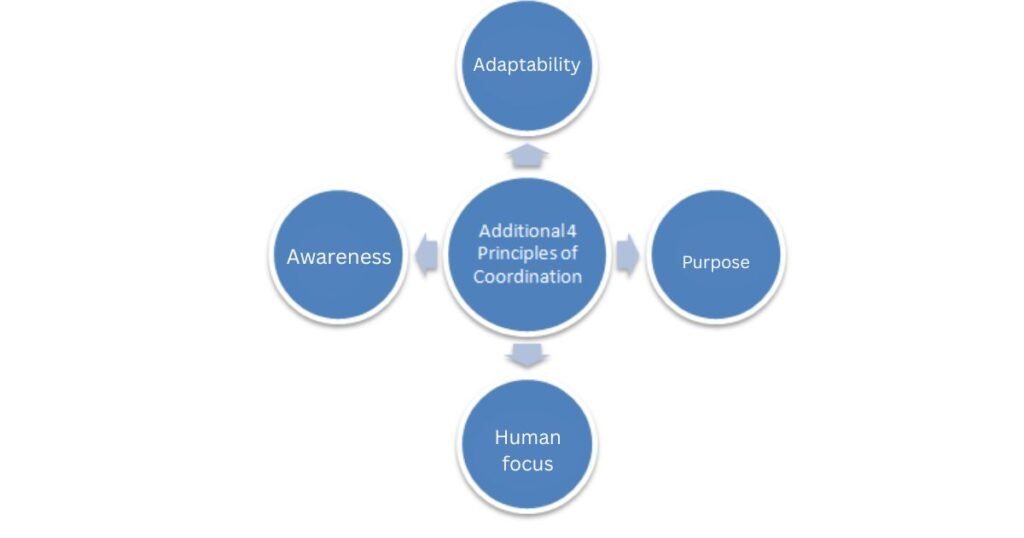
As much as falotani may take various forms, there are a number of principles that are consistent. Such similarities can be attributed to the fact that the concept is applicable across industries, culture and personal application.
| Principle | Meaning in Practice |
| Adaptability | Adjusting without losing direction |
| Awareness | Observing before acting |
| Human focus | Centering decisions on people |
| Purpose | Moving with intention |
These elements form the foundation of falotani thinking. When any one of them is missing, the concept loses its balance.
Practical Uses of Falotani in Modern Life
Falotani does not focus on professional or cultural discourses. Its principles are usually used by many people in their daily decision-making. The decision to develop competencies and then attain visibility is one such example. The other one is to enable projects to develop slowly and not to push outcomes. Thinking in the workplaces helps in planning and defining priorities.
Teams that take time to get to know issues tend to evade recurrent errors. In personal life, it assists people to know when they should take the initiative and when to wait. The reason being that it appreciates awareness, it will make people observe improvements that would otherwise be missed. With time, such awareness creates confidence and consistency.
Challenges in Understanding and Applying Falotani
This concept is not hard to understand and can be hard to apply on a regular basis. A lot of individuals understand the superficial meaning fast, but not much when it comes to practice. Such obstacles are typically a result of speed, pressure, and outer demands habits and not the idea itself.
1. The Idea as a Reduced Form
A major hindrance comes when individuals think that the idea is to bring about the outcomes at a faster rate. This misconception results in hasty judgments that do not take into account observation and thinking. In the long run, this strategy will undermine rather than bolster results.
2. Ignoring Background and Context
The other issue that emerges is when the concept is detached of its greater cultural and practical contexts. The use of context makes the use of the application superficial and mechanical. Perspective is brought about by knowing what makes the notion be so, rather than the way it sounds.
3. Anticipating Short-term Justification
Most people give up on the practice since the outcomes are not instantly apparent. The concept appreciates slow convergence instead of rapid identification. It is important to be patient so that you can make meaningful progress.
Why Falotani Holds Relevance in the Present Era?
The contemporary systems tend to pay attention to the speed, automation, and unrestricted output. Although the tools have their worth, they may also decrease reflection. It provides equilibrium since it helps people remember that direction is as much as movement. Awareness-based concepts are more significant in an uncertain environment. It promotes observation then action which minimizes the need to change courses unnecessarily. This aspect renders it useful in business, creativity, and self-development. Falotani still appeals as people strive to find meaning with progress. Its power is the ability to relate the wisdom of the past with current affairs.
Conclusion:
Falotani is a philosophy based on consciousness, responsiveness, and intention. It will not bring immediate outcomes, yet it will contribute to the consistent improvement, which will correspond to the actual needs. Such an equilibrium has made Falotani applicable in both the online world and cultural practices as well as individual experiences.
In-thought usage of Falotani allows human beings and organizations to have more direction and greater baselines. Living in a world that tends to run too fast it reminds us how knowing where we are is as important as knowing where we want to be.
Also Read About: Backmoon6.5: A Practical Shift in Digital Productivity Tools