
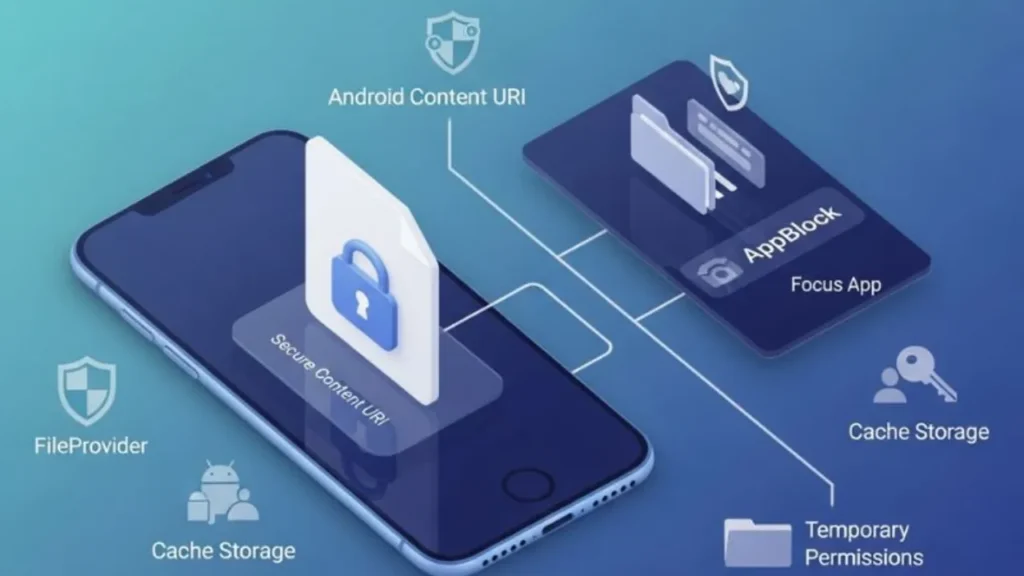
Many Android users and developers notice content://cz.mobilesoft.appblock.fileprovider/cache/blank.html while checking system logs, browser activity, or debugging tools. Initially, the string appears in a puzzling and even threatening manner since it does not appear like a typical web address. Nevertheless, this URI is not fractured, malicious, or malicious. It is possible because the Android operating system has a secure mechanism that gives access to internal files without revealing sensitive paths.
The interpretation of the content://cz.mobilesoft.appblock.fileprovider/cache/blank.html would assist in explaining how the Android apps secure the data and, at the same time, operate efficiently. This subject is particularly helpful to developers, testers and advanced users when they wish to know why such entries occur and what their purpose is.
What Is content://cz.mobilesoft.appblock.fileprovider/cache/blank.html?
The URI content://cz.mobilesoft.appblock.fileprovider/cache/blank.html is an Android Content URI. Content URIs enable the apps to share or access files within their internal location without exposing their true location. Android routes are accessed via a regulated permission scheme, rather than addressing a raw path to the storage.
This particular URI is a cached HTML file called blank.html which is in the application AppBlock. The file is a temp file that the application uses internally, which its users do not open or work with directly, although it can be displayed in logs or other technical reports when performing specific operations.
Why Android Uses Content URIs Like content://cz.mobilesoft.appblock.fileprovider/cache/blank.html
Android also added Content URIs in order to address security concerns in direct filepaths. The previous systems had the vulnerability of apps publicly exposing the location of files, which posed dangerous opportunities about data leaks and unauthorized access. These risks are avoided by Content URIs through giving Android the authority over each access request.
Android will verify the permission of the app when attempting to access the content of cache/blank.html, which is located under the content://cz.mobilesoft.appblock.fileprovider. In case the permissions are valid, the system will provide access. Otherwise, there is automatic denial of access. This process secures the integrity of the apps and data of users.
Understanding the Structure

The structure of content://cz.mobilesoft.appblock.fileprovider/cache/blank.html follows Android’s standard Content URI format. All elements of the URI possess their purpose and definition.
| URI Component | Explanation |
| content:// | Identifies it as an Android Content URI |
| cz.mobilesoft.appblock.fileprovider | Unique authority assigned to AppBlock |
| cache | Indicates the app’s cache directory |
| blank.html | Temporary HTML file used internally |
This structured approach ensures consistency across Android apps and prevents accidental exposure of internal storage paths.
How AppBlock Uses content://cz.mobilesoft.appblock.fileprovider/cache/blank.html
AppBlock is created to block distracting applications and websites. Once it is blocked, the app must show stable material rather than an error or a glitchy interface. Here, one will need the content://cz.mobilesoft.appblock.fileprovider/cache/blank.html.
The blank.html file that is being served by the cache is a placebo. It is loaded by default and enables AppBlock to display a neutral screen or message. The technique enhances the user experience because it does not result in sudden crashes, blank screens, and change in appearance.
Situations Where content://cz.mobilesoft.appblock.fileprovider/cache/blank.html Appears
This URI is never observed by most users in their day-to-day phone use. It has a tendency to manifest itself in technical or background cases. Its appearance does not mean that something is wrong or insecure.
The typical ones are Android system logs, debugging tools, WebView redirects and crash reports. In all these cases, content://cz.mobilesoft.appblock.fileprovider/cache/blank.html is simply part of normal app behavior.
Role of WebView in content://cz.mobilesoft.appblock.fileprovider/cache/blank.html
Android Apps contain WebView components which show web-based content. WebView will still need valid HTML to display even when it gets blocked or inaccessible information. Android redirects the WebView to the cache in place of aborting the screen.
Where this is done it offers a lightweight and safe fall back. This will guarantee that the interface is responsive and visually consistent despite the restriction of access.
Security Benefits of content://cz.mobilesoft.appblock.fileprovider/cache/blank.html
Security is a major reason why Android uses FileProvider-based Content URIs. The design behind content://cz.mobilesoft.appblock.fileprovider/cache/blank.html follows strict security guidelines.
| Security Aspect | How It Helps |
| Permission control | Prevents unauthorized file access |
| App sandboxing | Keeps app data isolated |
| Temporary access | Limits long-term exposure |
| Controlled directories | Reduces attack surface |
These have safeguarded users as well as developers against unintentional data leakage or unintended malicious attacks.
Troubleshooting Issues
Occasionally, developers may see errors related to loading this URI. In most cases, the issue is not with the URI itself but with permissions or timing. Problems usually occur when cache files are cleared, permissions are missing, or WebView is not configured to handle content URIs. Verifying FileProvider settings and permission grants often resolves such issues quickly.
Performance Impact of content://cz.mobilesoft.appblock.fileprovider/cache/blank.html
Cached HTML enhances performance on the apps. The blank.html is simple and loads immediately and this saves memory and dependence on the network. This would assist apps to be fast even with older devices or unreliable connections.
| Performance Area | Benefit |
| Load time | Faster screen rendering |
| Network usage | No external requests |
| Stability | Fewer UI crashes |
| Responsiveness | Smooth transitions |
Because of these benefits, many modern Android apps follow a similar caching strategy.
Why content://cz.mobilesoft.appblock.fileprovider/cache/blank.html Matters for Android Development
The content knowledge of content://cz.mobilesoft.appblock.fileprovider/cache/blank.html will provide some insight into the current Android design philosophy. The URI indicates the balance of apps, which does not reveal internal systems to external attacks. Apps created by developers following this style are perceived as trustworthy and safe. It plays to the advantage of the users without them being aware of the technical aspects of the scenes.
Conclusion:
URI content://cz.mobilesoft.appblock.fileprovider/ cache / blank.html is a healthy and deliberate component in the Android content management system. It is there to serve as secure and cached content placeholders in order to safeguard internal file paths. It is not an error, threat, but enhances the stability, security, and performance of apps.
Knowing the functionality of content://cz.mobilesoft.appblock.fileprovider/cache/blank.html, developers are able to debug with confidence and users are able to be confident when they find it in logs or reports. This URI is an intelligent and secure solution that is commonly applied in contemporary Android applications.
Also Read About:- About Qushvolpix Brand: Story, Growth, and Market Trust