

Almost every online action, from sending emails to managing finances, begins with a login screen that quietly asks us to protect our identity. When faced with that moment, many users type something that appears complex and move on without thinking further. A string like zaqlapttim45 feels unfamiliar, looks random, and satisfies most website requirements, which creates a sense of confidence.
However, modern cybersecurity does not evaluate passwords based on appearance alone. What matters is how predictable a password becomes when analyzed by automated systems designed to detect human behavior. Understanding why zaqlapttim45 feels secure but may still be vulnerable opens the door to better digital habits. This article explains what this password represents, how attackers analyze such strings, and what steps actually reduce risk in real-world conditions.
What Is Zaqlapttim45 in the Context of Password Security?
zaqlapttim45 is an ordinary form of password generated by human beings who are attempting to be cautious without a lot of reflection of the procedure. It involves both letters and numbers, does not use evident words in a dictionary and does not look like personal information. From a user’s perspective, this seems like responsible behavior. From a technical standpoint, however, this type of password often reflects predictable decision-making.
Humans tend to create passwords that are readable, easy to type, and quick to remember. Attack systems are designed with this reality in mind, which means passwords like zaqlapttim45 often fall into testing categories much earlier than users expect. This gap between perceived strength and actual resistance is one of the biggest misunderstandings in modern password security.
Why Zaqlapttim45 Appears Strong to Human Users?
Passwords such as zaqlapttim45 feel secure because they meet visible standards that websites enforce. These standards focus on surface-level complexity rather than statistical unpredictability. As a result, many users believe they are protected once a password looks messy enough.
The confidence comes from visual confusion rather than real randomness. Humans interpret unfamiliar sequences as complex, even when those sequences follow common creation habits. Computers, on the other hand, do not rely on visual judgment and instead measure likelihood.
Human Patterns Embedded in Zaqlapttim45
People believe they are being creative when generating passwords, but most unknowingly reuse familiar structures. These structures dramatically reduce security because attackers program their tools to test them early.
Several recognizable patterns appear in zaqlapttim45, even though they are not obvious at first glance.
Common human password habits include:
- Typing letters that sit close together on a keyboard
- Combining short readable chunks instead of true randomness
- Adding numbers at the end rather than mixing them throughout
Cybersecurity tools are learning and using billions of stolen passwords, which enables them to detect these patterns immediately. This implies that a password may appear complicated, but still be easier to break than anticipated.
Understanding Entropy and Password Strength
The real measurement behind password security is entropy, which describes how unpredictable a password is. Higher entropy means more possible combinations and more time required to guess the correct one. Entropy increases far more effectively through length than through visual complexity.
A password like zaqlapttim45 may contain mixed characters, but its length and structure limit entropy more than users realize. Longer passwords, especially passphrases, expand the number of possible combinations exponentially.
Password entropy comparison
| Password Type | Example | Estimated Strength |
| Short mixed | zaqlapttim45 | Moderate |
| Symbol-heavy | Z@q!4L | Low |
| Long phrase | ocean-mirror-forest-clock-stone | Very High |
This comparison shows why security experts consistently prioritize length and randomness over decoration.
How Passwords Are Actually Compromised Today
Many users imagine hackers slowly guessing passwords character by character. In reality, most breaches happen through indirect methods that bypass password strength entirely. Understanding these methods explains why relying solely on zaqlapttim45 is risky.
Credential reuse remains one of the most common vulnerabilities. When one platform is breached, attackers test the same credentials across other services. Phishing attacks also continue to succeed by convincing users to voluntarily enter passwords into fake login pages. Malware and keylogging software further reduce the importance of password complexity by capturing credentials directly during use.
Why Password Managers Reduce Human Risk?
A password manager fixes the fundamental vulnerability of password security namely human predictability. Such tools do not use memory as they create long and random passwords that have no recognizable pattern.
The passwords such as zaqlapttim45 can never be reused or written down again with the help of a password manager. Each account receives a unique credential that remains isolated from all others.
Key benefits of password managers
| Feature | Security Impact |
| Unique passwords | Stops credential reuse |
| Random generation | Removes human patterns |
| Encrypted storage | Protects saved data |
By shifting responsibility from memory to software, password managers significantly reduce attack success rates.
The Role of Two-Factor Authentication in Modern Security
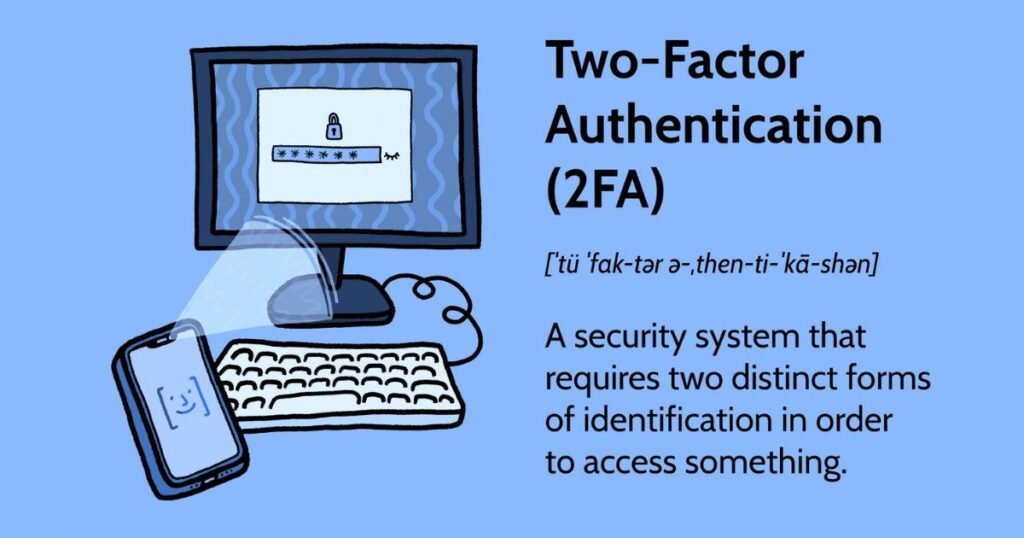
Two-factor authentication provides the second level of protection in addition to passwords. In case a person has got your password, he or she cannot access your account without the second check.
This makes passwords like zaqlapttim45 far less dangerous when paired with proper authentication.
Common 2FA methods:
- SMS codes sent to your phone
- Authenticator apps that generate time-based codes
- Physical security keys
Authenticator apps and hardware keys are considered the most secure options because they are resistant to interception.
Using Passphrases Instead of Short Passwords
For the few credentials that must be remembered, passphrases offer a better solution than short mixed passwords. A passphrase combines multiple unrelated words into a long sequence that is easy to recall and difficult to guess.
Compared to zaqlapttim45, a passphrase dramatically increases entropy while reducing mental effort. The brain remembers stories and images more easily than random characters. This approach balances usability and security without requiring technical knowledge.
The Shift Toward Passkeys and Passwordless Login
The issue of traditional passwords is slowly being driven out of the technology industry by the use of passkeys. These systems use cryptographic keys that are kept in a secure environment in the user devices to replace shared secrets.
Passkeys do not require typing in of any passwords at all, and thus, they do away with the threat of phishing and reuse of credentials. Authentication is based on biometrics or device level authentication and not on memory. Until passkeys become universal, strong password practices remain essential for digital safety.
Why Zaqlapttim45 Reflects a Larger Security Misunderstanding?
The password zaqlapttim45 illustrates a widespread misconception about security. It satisfies visible rules, looks complex, and feels responsible, yet it still relies on predictable human behavior. The real security is that of less dependence on memory, and the adoption of structures based on mathematics and not intuition. A combination of password managers, two-factor authentication, and passphrases constitutes a defense that evolves with the contemporary threats. Protection of digital identity is not a choice anymore. It involves making deliberate decisions with the help of validated instruments.
Conclusion: Rethinking Password Security Beyond Zaqlapttim45
Passwords like zaqlapttim45 highlight how easy it is to confuse appearance with protection. Though these passwords can pass the checks of a website, they are not the best passwords that are presently on the market. Present-day threats are based on predictability and reuse as well as human habits instead of brute force.
The keys to a secure online life are long, unique passwords, multiple authentication, and devices that eliminate the element of guessing. The adoption of improved practices at this time will decrease the risk in the long-term and will restore control of users over their digital identity. It is not the harder strings that one has to memorise, but rather the security systems that are able to run silently and reliably in the background.
Also Read About: About JRO279WAXIL: Meaning, Usage, and Digital Significance